Electrical Testing
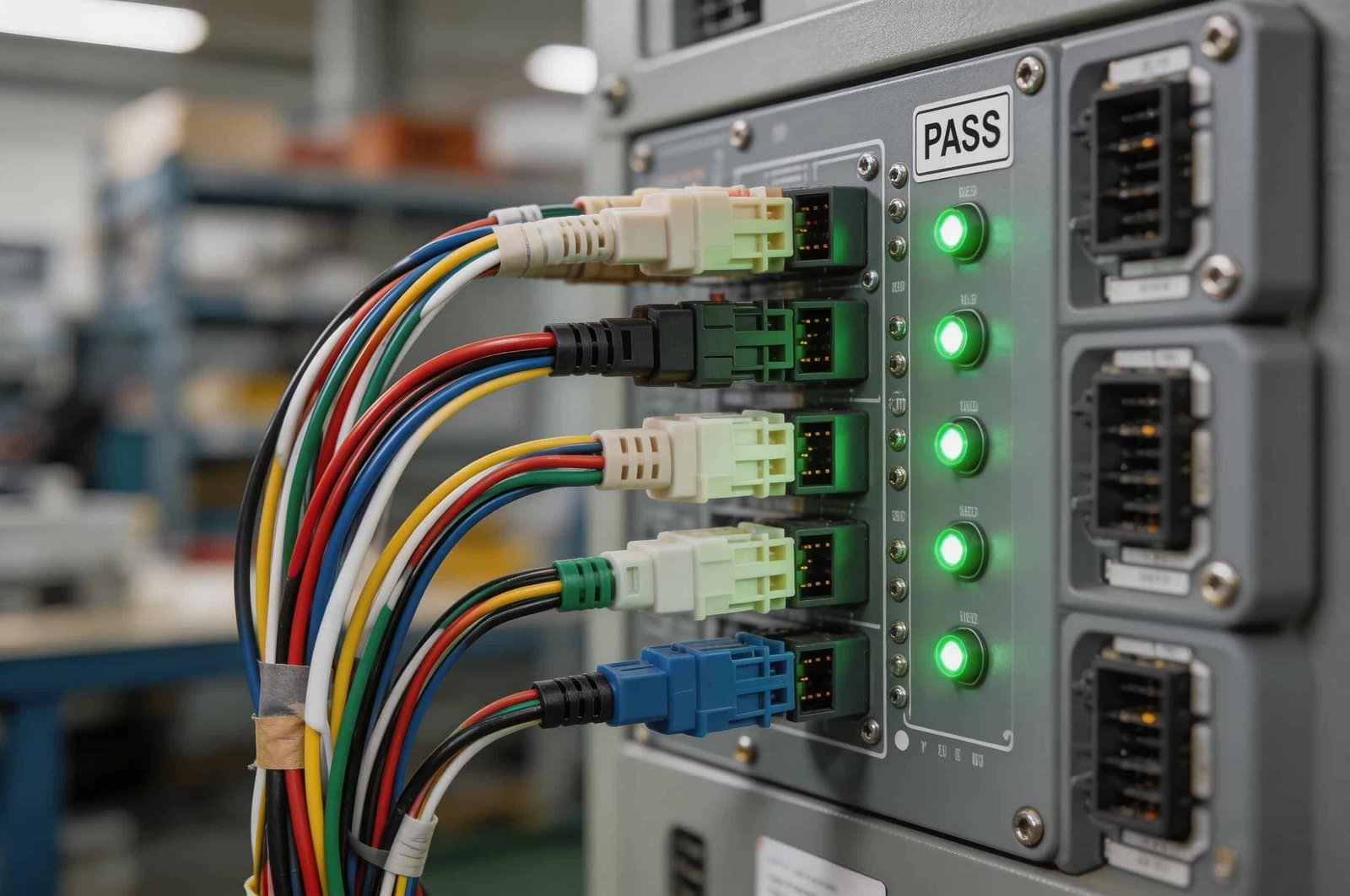
Continuity, short-circuit and miswire detection using electrical test equipment manufactured by a Chinese brand.
Wire Harness Testing & Quality Control
Cablum combines 100% finished-product electrical testing with project-specific crimp, mechanical, environmental and sealing verification. Testing is performed against the requirements agreed for each wire harness or cable assembly.
A Defined Inspection Path
Inspection methods, acceptance limits and sampling requirements are confirmed according to the drawing, customer specification and applicable workmanship criteria. We do not use unsupported “zero-defect” claims; we use documented checks to identify and control nonconforming product.
Confirm part numbers, pinout, dimensions, workmanship criteria and test scope.
Verify applicable wires, terminals, connectors and protective materials before use.
Monitor cutting, stripping, crimping, assembly and identification requirements.
Use visual inspection, pull-force testing or cross-section analysis as specified.
Test every finished assembly for continuity, shorts and miswiring.
Complete the agreed visual, dimensional and project-specific verification before shipment.
In-House Test Capabilities
Not every test belongs on every product. Electrical testing is performed on every finished assembly, while destructive, environmental, endurance and sealing tests are performed according to the agreed project scope or sampling plan.
Continuity, short-circuit and miswire detection using electrical test equipment manufactured by a Chinese brand.
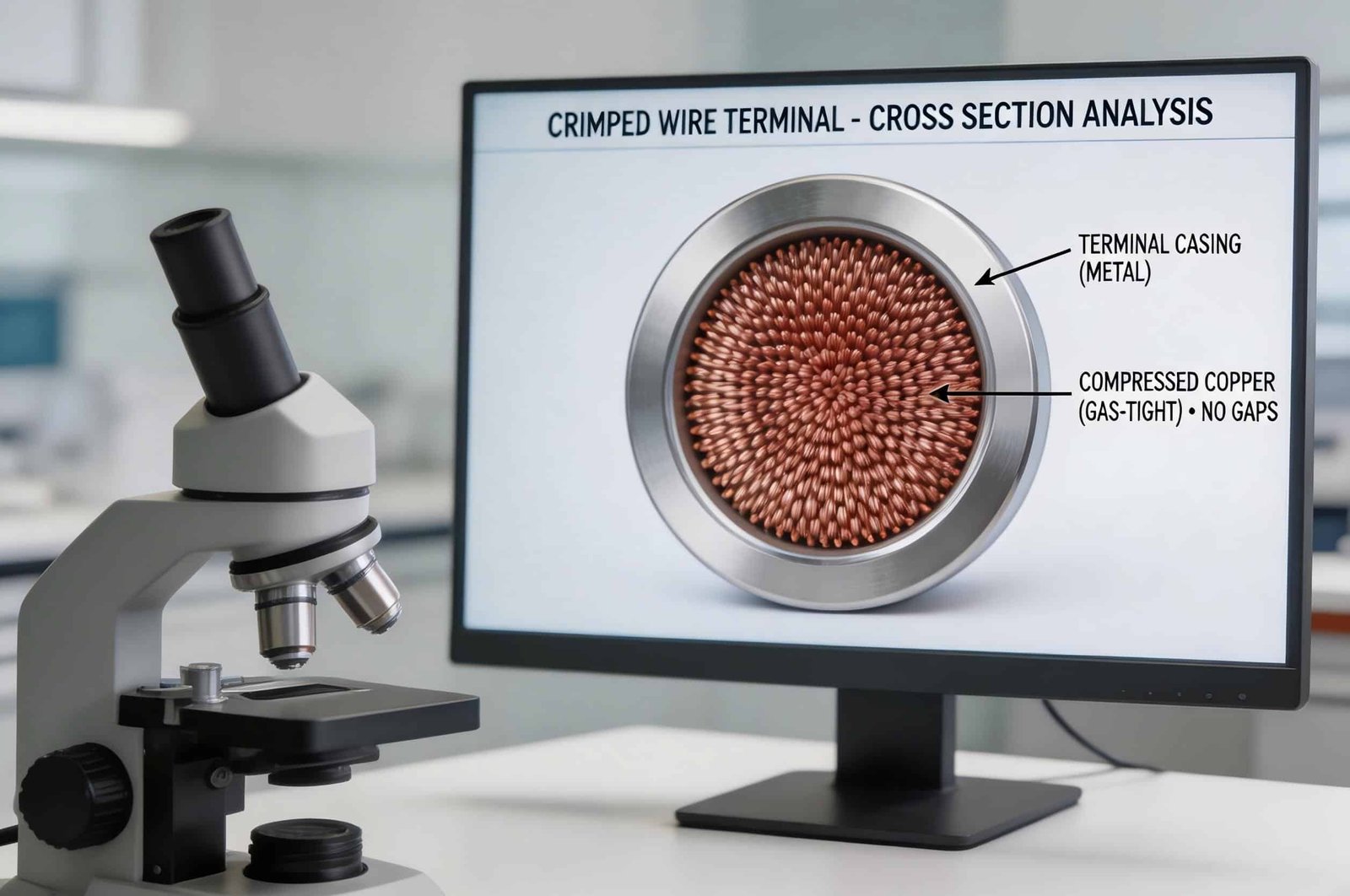
Terminal crimp cross-section analysis is performed when required by the project or process-control plan.
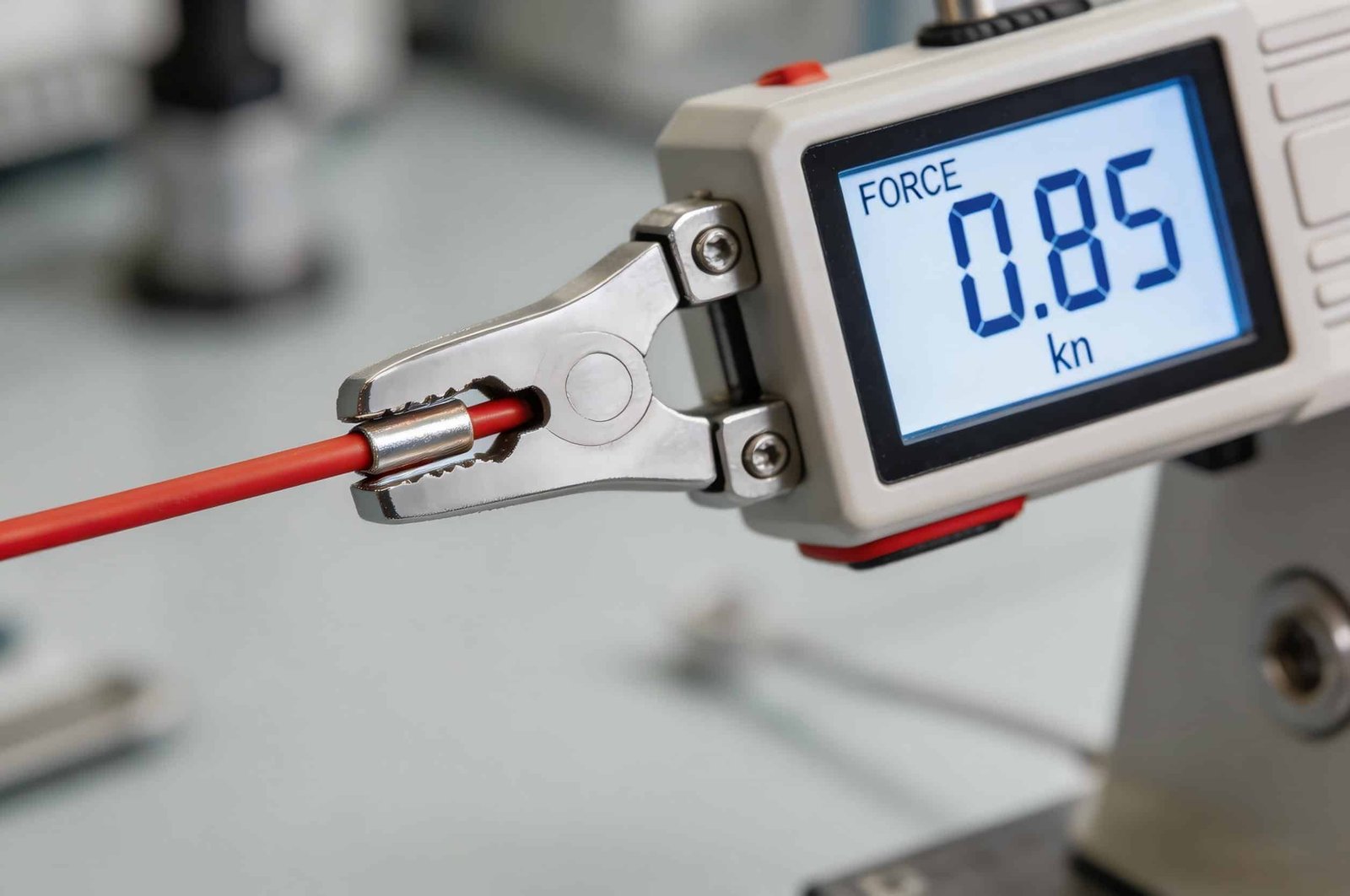
Crimp pull force is checked against customer requirements or the applicable specification for the wire-and-terminal combination.
In-house temperature-and-humidity, salt-spray and UV testing according to agreed conditions.
IP67 or IP68 performance can be tested and validated for applicable projects under defined test conditions.
Check workmanship, routing, labels, coverings, connector condition and agreed dimensions.
100% Finished-Product Electrical Test
Every completed wire harness or cable assembly is electrically tested for continuity, short circuits and miswiring. The test program is created from the approved pinout or drawing.
Additional electrical requirements can be reviewed when they are defined in the customer specification. We describe the equipment by function and do not claim an unsupported Cirris brand.
Scope: “100% tested” on this page refers specifically to these finished-product electrical checks—not to every destructive or environmental test.
Project-Specific Validation
Test conditions vary by product, application and customer specification. Cablum does not present one load, cycle count, pressure or leak limit as a universal standard.
In-house bending test shown for reference. Load, angle, cycle count and acceptance criteria are defined for each applicable project.
Bending angle, load, cycle count and acceptance criteria are set according to the agreed test plan rather than a universal cycle claim.

In-house temperature-and-humidity chamber testing is available when the test conditions, duration and acceptance criteria are defined.
In-house salt-spray and UV testing can be arranged for relevant materials or assemblies under project-specific conditions.

Sealing performance can be tested for applicable designs. Test method, sample quantity and acceptance criteria must be agreed for each project.
Inspection Records
Test and inspection records can be provided when requested and agreed before production. The format and content depend on the product, test method and customer requirements.
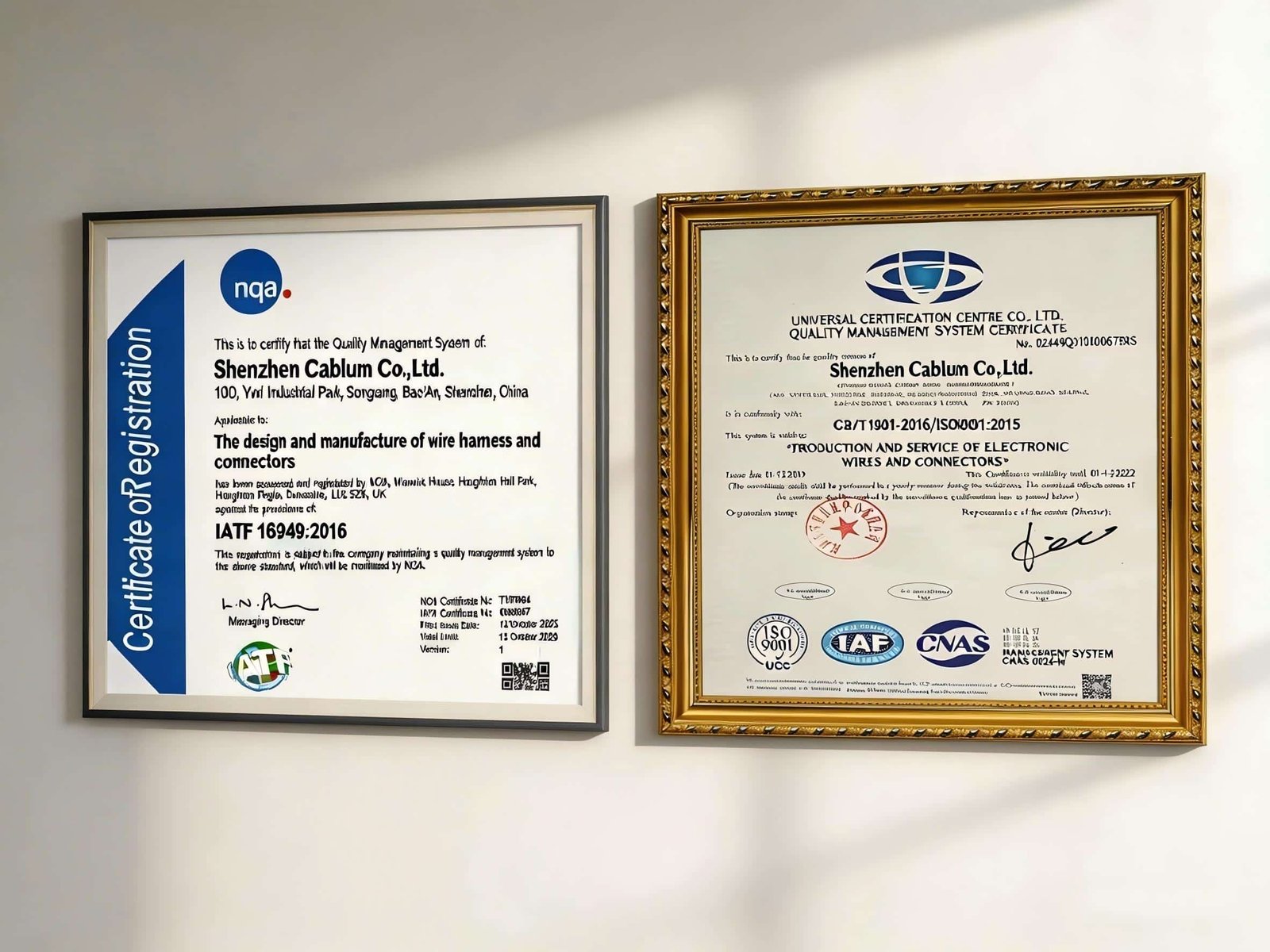
Cablum’s quality procedures operate within ISO 9001 and IATF 16949 certified management systems. These certifications do not by themselves mean that Cablum is IPC Class 3 certified, ISO 13485 certified or automatically qualified as a Tier 1 supplier.
Please note: Record availability, sample size and reporting format should be stated in the RFQ and confirmed in the quotation.
FAQ
Yes. Every finished assembly is tested for continuity, short circuits and miswiring using a test program based on the approved pinout or drawing.
Cablum uses electrical test equipment from a Chinese manufacturer. We do not claim Cirris-brand equipment.
Crimp quality can be evaluated through visual inspection, pull-force testing and in-house cross-section analysis according to the project requirements and applicable acceptance criteria.
No. Pull-force test methods and acceptance limits are defined by the customer specification or the applicable standard for the wire-and-terminal combination.
No. Temperature-and-humidity, salt-spray, UV, bending and similar tests are performed according to the agreed project scope or sampling plan.
Yes, for applicable designs. The test method, conditions, sample quantity and acceptance criteria are agreed for each project; the rating is not automatically claimed for every product.
Yes. Customers can provide test methods, limits, sampling requirements and documentation needs for review before quotation and production.
Yes. Applicable test and inspection records can be provided when their scope and format are agreed before production.
Define the Test Plan
Send the drawing, application, quantities and acceptance requirements for engineering review.