Annual Forecast vs. Order Quantity in Wire Harness RFQs
An RFQ can contain two very different numbers: the quantity needed for the next order and the quantity expected over the coming year. Both are useful, but a supplier should not have to guess what each number means.
Identify the quantity you want quoted now, then describe future demand separately. State whether future quantities include the first order, which part numbers they cover and how certain the plan is.
This guide includes a fictional example, a quantity-planning worksheet and wording you can adapt for your next wire harness RFQ.

1. Give Each Quantity a Clear Meaning
Forecasting estimates future demand for planning. It is different from simply listing the quantity requested in today’s quotation. For general background on forecasting future requirements, see SAP’s demand forecasting and planning overview.
For a custom assembly RFQ, use plain labels rather than assuming every reader interprets “annual quantity” the same way.
| Quantity field | What the buyer should explain |
|---|---|
| Quantity to quote now | The batch for which you want a current quotation. An RFQ is still a request for a quotation, not a statement that the order has already been placed. |
| Forecast quantity | Estimated demand over a named period. State whether the current batch is included. |
| Expected batch pattern | Likely order sizes or timing, if known. Mark tentative quantities as tentative. |
| Sample quantity | Any separately requested samples and whether they are included in the forecast. |
| Confirmed order reference | If an order already exists, identify it separately from the forecast and from requests for additional quotations. |
These labels organize the discussion; the parties’ agreed purchasing documents determine the actual arrangements.
2. Avoid Double-Counting the First Batch
Fictional planning example—not a Cablum customer order, MOQ or capacity claim: a buyer requests a quotation for 120 assemblies and expects total demand of 960 assemblies during the next 12 months.
If the 960 includes the initial 120, the remaining forecast is 840. If the buyer instead means 960 additional units, the combined quantity is 1,080. One short sentence removes the ambiguity:
The 12-month forecast of 960 units includes the initial 120-unit batch. The remaining 840 units are tentative future demand; later batch quantities and timing are not yet confirmed.
Do not divide the annual figure into equal monthly orders unless that is the actual plan. An annual total alone does not describe when units will be needed.
3. Separate Different Harness Configurations
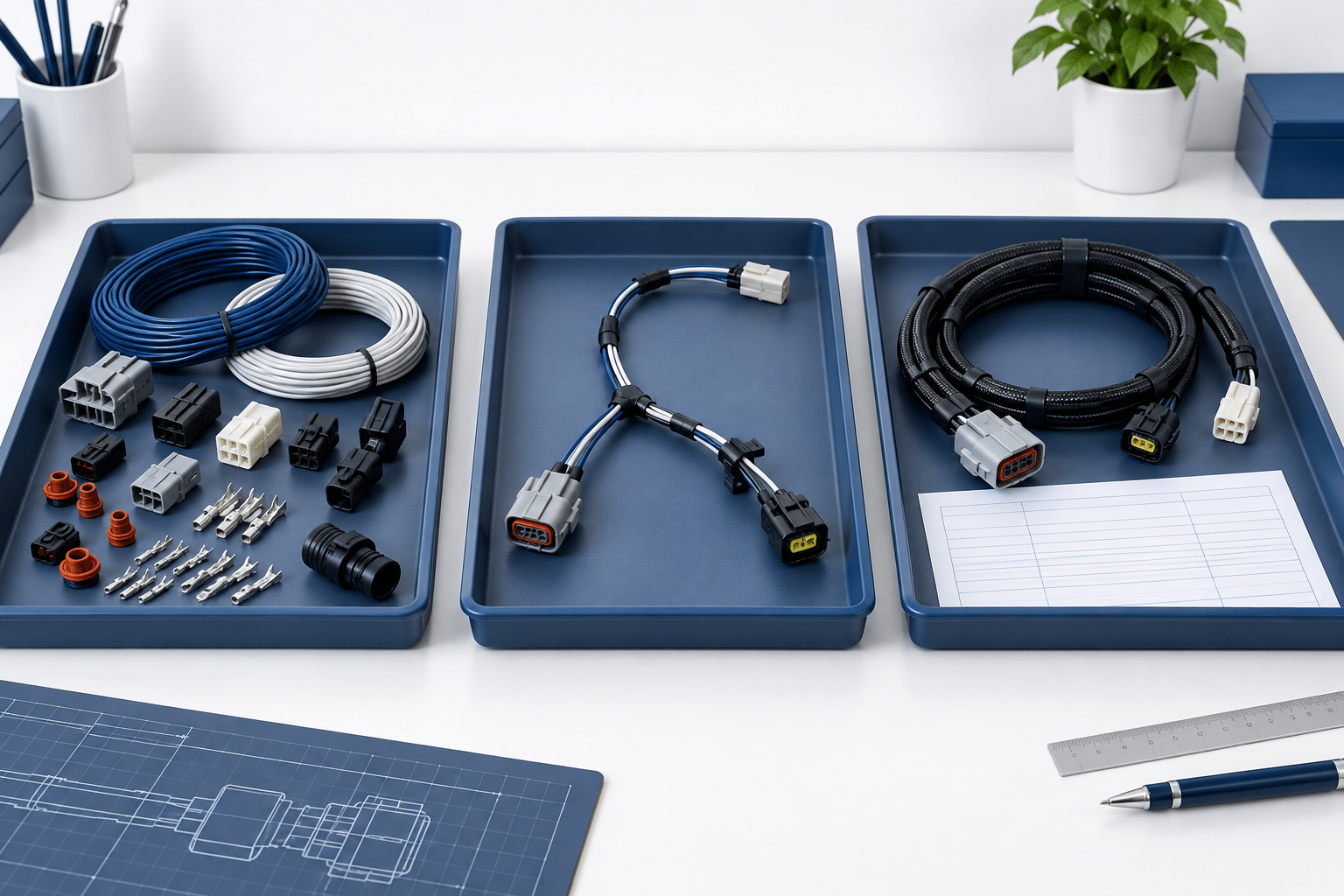
A total across several harnesses is less informative than a quantity against each part number and revision. Different lengths, connectors or branch arrangements should be identifiable in the quantity plan.
For example, if a combined forecast covers two configurations, list the forecast for each instead of assigning the full combined quantity to both. Identify any configuration whose demand is still unknown.
Link each row to the applicable BOM and drawing. If the design is pending, flag the revision status rather than presenting the quantity as a released production requirement.
4. Ask for Explicit Quotation Assumptions
A forecast gives useful context, but it should not leave the basis of the quoted price unclear. Ask which batch quantity and purchasing assumptions the supplier used.
- Is the price based on the immediate batch or another stated quantity?
- Are any tooling, setup or documentation charges shown separately?
- Does the quotation assume a particular repeat-order pattern?
- Are component purchasing quantities different from the assembly quantity?
- Does any proposed advance material purchase need separate agreement?
Do not assume that sharing a forecast reserves stock, fixes future prices or authorizes advance purchasing. Ask what the supplier proposes and document any arrangement separately. This article does not promise that Cablum offers stockholding, scheduled releases or a particular volume discount.
5. Use a Quantity-Planning Worksheet
Copy this structure into your RFQ. Leave unknown values clearly marked as pending rather than filling them with invented precision.
| Field | Information to enter |
|---|---|
| Part and revision | Harness part number; drawing and BOM revision |
| Current RFQ quantity | Quantity requested for the present quotation |
| Forecast period | Explicit start and end dates, or a clearly defined rolling period |
| Forecast total | Expected demand for this part during that period |
| Inclusion rule | Whether the current batch and any samples are included in the total |
| Future batch pattern | Expected batches and timing, or “not yet confirmed” |
| Planning confidence | Identify known requirements versus tentative expectations |
| Next review | When you expect to update the plan and who will provide it |
| Supplier assumptions | Price basis and any proposed purchasing or inventory arrangements requiring confirmation |
6. Update the Plan Without Hiding What Changed
When demand changes, send a dated update that identifies the affected part number and period. Show whether the change concerns the current RFQ, an existing order or future forecast only.
A concise update should state the previous estimate, the new estimate and any known timing change. Ask the supplier to confirm implications rather than assuming the old quotation or schedule remains applicable.
For the separate question of when a schedule starts and ends, use our wire harness lead-time confirmation guide.
Copy-and-Paste RFQ Wording
Please quote [quantity] units of [part number and revision] for the current requirement.
Our estimated demand for [start date to end date] is [quantity] units. This forecast [includes / excludes] the current batch and [includes / excludes] sample quantities.
The expected future batch pattern is [details / not yet confirmed]. Please identify the quantity and assumptions used for your quotation, including any separate charges.
Please identify any proposed advance purchasing or inventory arrangement separately for our review. We expect to update the forecast on [date].
Check Your Quantity Plan Before Sending It
What if the annual total is known but future batch sizes are not?
Provide the annual estimate and explicitly mark the batch pattern as unconfirmed. Ask for the current batch quotation separately. Do not invent equal monthly releases just to fill the planning sheet.
What if demand covers several revisions or variants?
Use separate rows for each known configuration and flag quantities that are not yet allocated. Make clear whether a newer revision replaces an older one or represents an additional requirement; do not count the same expected units twice.
What if the supplier proposes buying components ahead?
Ask for the affected parts, quantities and proposed commercial conditions in writing before agreeing. Record who must approve the proposal. Sharing a forecast should not leave either party guessing about the intended purchasing instructions.
If a material proposal involves different parts, use the component substitution review table. Mark any configuration changes against the applicable drawing and BOM revision records.
Prepare Your Cablum Project Review
Cablum supports custom wire harness and cable assembly projects based on customer requirements. Send your drawing, BOM, current quotation quantity and separately labeled forecast so the project inputs are clear.
Quantity, timing, component availability and commercial arrangements need project-specific review. A forecast is planning context, not a universal promise of price, stock or manufacturing capacity.