DRAWING-BASED MANUFACTURING · REQUIREMENT CLARIFICATION
Wire Harness Drawing vs. Sample: How to Resolve Conflicting Requirements
A supplied harness sample and a drawing can describe different versions of the same assembly. The connector may look different, a branch may appear longer, or the label on the sample may not match the BOM.
Before treating either source as the manufacturing instruction, identify the conflict and ask the customer’s responsible contact to confirm the requirement for the next activity. This guide provides a discrepancy record and a clarification email—not a rule that a sample, drawing or email always takes priority.
1. Identify What Each Reference Is Meant to Control
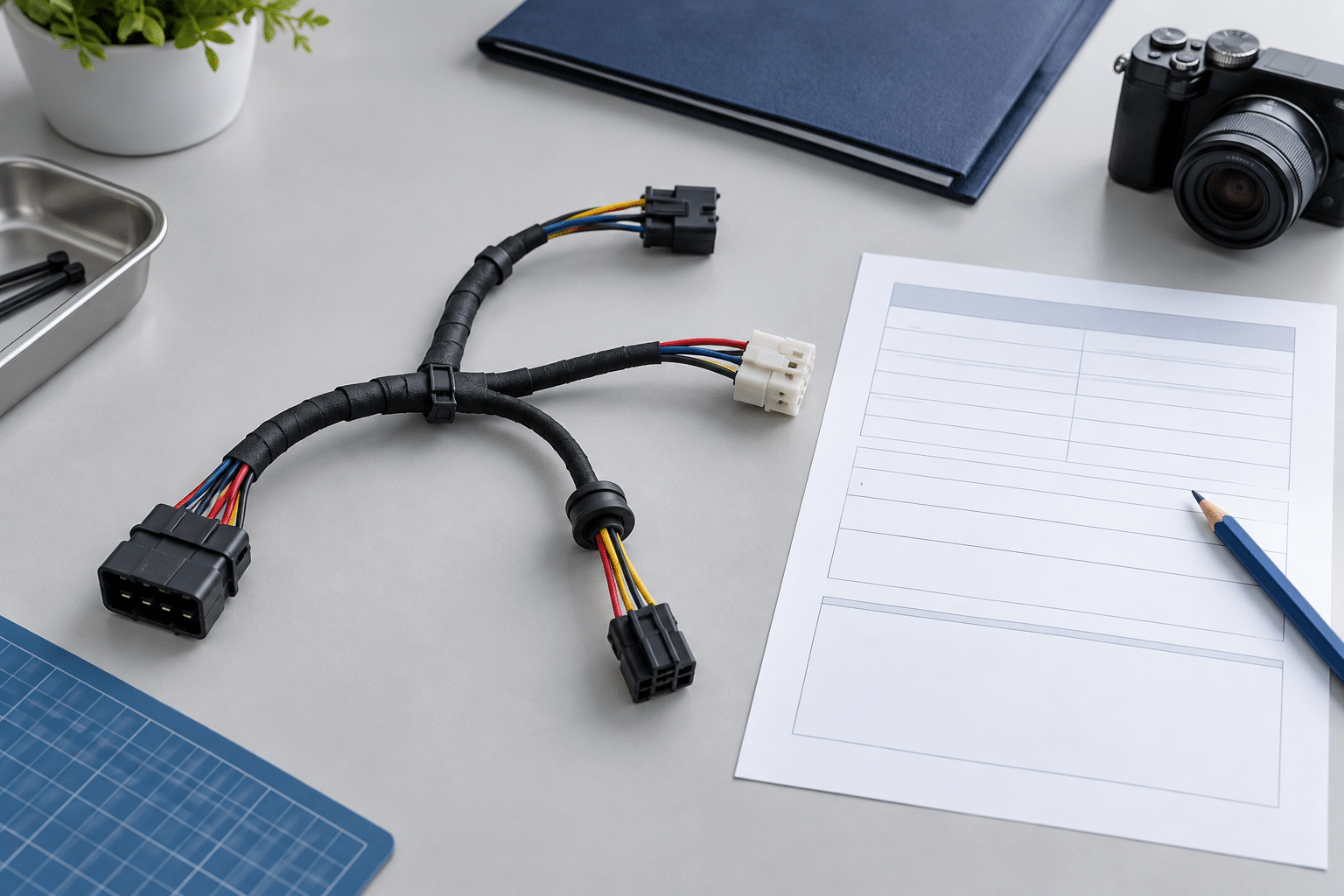
Record the drawing number and revision, BOM revision, sample identifier and any relevant specification or approval reference. Ask why the sample was supplied: to demonstrate fit, connector orientation, workmanship, packaging, or the complete intended configuration?
A reference sample may represent an earlier build, a modified prototype or only one characteristic. An apparently newer file may still be an unapproved proposal. Record these states instead of treating file dates or physical appearance as proof of approval.
If the customer’s controlled documents already define an order of precedence, refer the question to that rule and confirm its application. If the hierarchy is unclear, do not invent one. For a general document completeness check, use the drawing checklist.
2. Write the Conflict as Two Specific Statements
“The sample is different” is not enough to resolve the build definition. Identify the exact characteristic and keep the two sources separate. A photograph supports an observation but does not, on its own, establish a dimensional or electrical requirement.
| Conflict | Record from each source | Ask the customer to confirm |
|---|---|---|
| Connector identity | Drawing/BOM item reference and full specified part number; sample markings and identifiable features. | The required component identity and whether the sample component is an approved reference or only an example. |
| Branch length | Drawing dimension and its reference points; sample observation using a documented measurement basis. | The controlling dimension, tolerance and measurement reference—not merely “copy the sample.” |
| Label text | Drawing callout or artwork revision; exact sample text and label position. | The approved text, artwork and location for the applicable build. |
| Covering extent | Specified sleeve or covering boundaries; observed sample boundaries. | The required material reference and start/end locations. |
| Connection mapping | Approved pinout reference and any conflicting sample information, with the basis of that information stated. | The authorised connection definition and any verification needed before use. Do not infer a connection map from wire colours. |
3. Use One Clarification Record per Open Decision
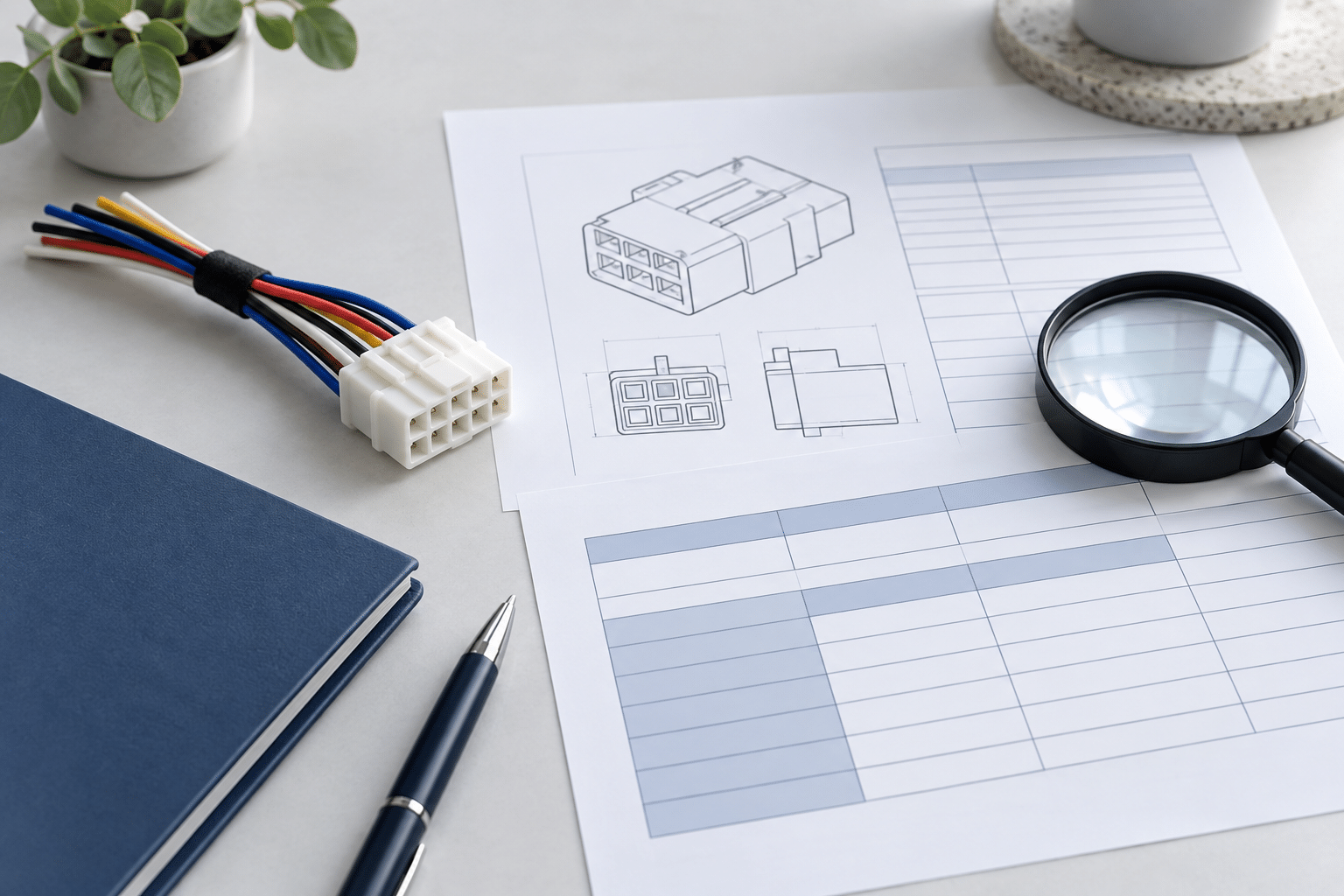
Keep the record short enough that engineering, purchasing and the manufacturer can refer to the same issue. These are suggested fields, not a mandatory Cablum form or a substitute for the customer’s document-control system.
| Field | Example of information to enter |
|---|---|
| Issue and assembly identity | Issue Q-01, assembly reference, affected end or branch. |
| Source A / Source B | Drawing revision and zone / sample ID and referenced photograph. |
| Conflict statement | What differs, what has been observed, and what remains unknown. |
| Decision requested | The specific requirement needing confirmation and the responsible customer contact. |
| Affected activity | Quotation, material selection, prototype build or production release; identify the affected scope. |
| Resolution | Confirmed requirement, approval reference, applicable quantity/build and the document that will carry the decision. |
| Status | Open, clarification received, controlled documents updated, or ready for the agreed next action. |
Receipt of a question, acknowledgement of a photograph and approval of a requirement are different events. Keep the unresolved item visibly open until the responsible decision has been recorded.
4. Separate a Review Assumption From Permission to Build
If a quotation is requested before the conflict is resolved, ask whether a clearly stated provisional basis is acceptable for that quotation. Identify exclusions and open items rather than silently pricing one interpretation as the final design.
A provisional quote assumption does not authorise procurement, a component substitution or a production build. Agree how the unresolved issue affects the next activity and which work, if any, can proceed independently.
Fictional example: Drawing revision B identifies connector J2 as part [A], while the supplied sample appears to use [B]. The customer confirms that the sample was supplied only to explain the branch route. Record that limited purpose; obtain the confirmed connector requirement and review the remaining routing questions separately.
This example illustrates decision scope. It does not establish that either component is equivalent or suitable for a real project. Use the original vs. alternative component guide if the decision involves a proposed substitution.
5. Put the Resolution Into the Applicable Build Definition
Once the customer confirms a requirement, identify the updated drawing, BOM, specification or approval record that carries it. State which quotation, sample build or production quantity it applies to. If earlier work may be affected, request a separate disposition decision rather than assuming that old material or assemblies remain acceptable.
Keep the original sample identifiable. If it is modified after the decision, record that change so it does not continue to circulate as an unchanged reference. The revision-control guide covers maintaining aligned documents after a decision; the sample feedback template covers reporting results of a sample review.
Clarification Email Template
We identified a difference for assembly [reference], item [location]. Drawing/BOM [reference and revision] specifies [requirement], while sample [ID] shows [observation, with photo or measurement reference].
Please confirm which requirement applies to [quotation / prototype / production scope], the intended purpose of this sample, and the approval or revised-document reference we should use.
Our proposed interpretation, if any, is [proposal / none]. It remains unapproved. Please also confirm the handling of the affected activity while this issue is open. We will record the agreed requirement separately from this clarification request.
Have a Drawing and Sample That Need Clarification?
Cablum manufactures custom wire harnesses according to customer drawings, wire and connector requirements. Share the relevant documents, sample identity and a clear description of the difference for project review. Manufacturing scope remains subject to the confirmed requirements.