CUSTOM CONNECTOR-TO-WIRE ASSEMBLIES
Custom Pigtail Wire Harness Assemblies for OEM Equipment
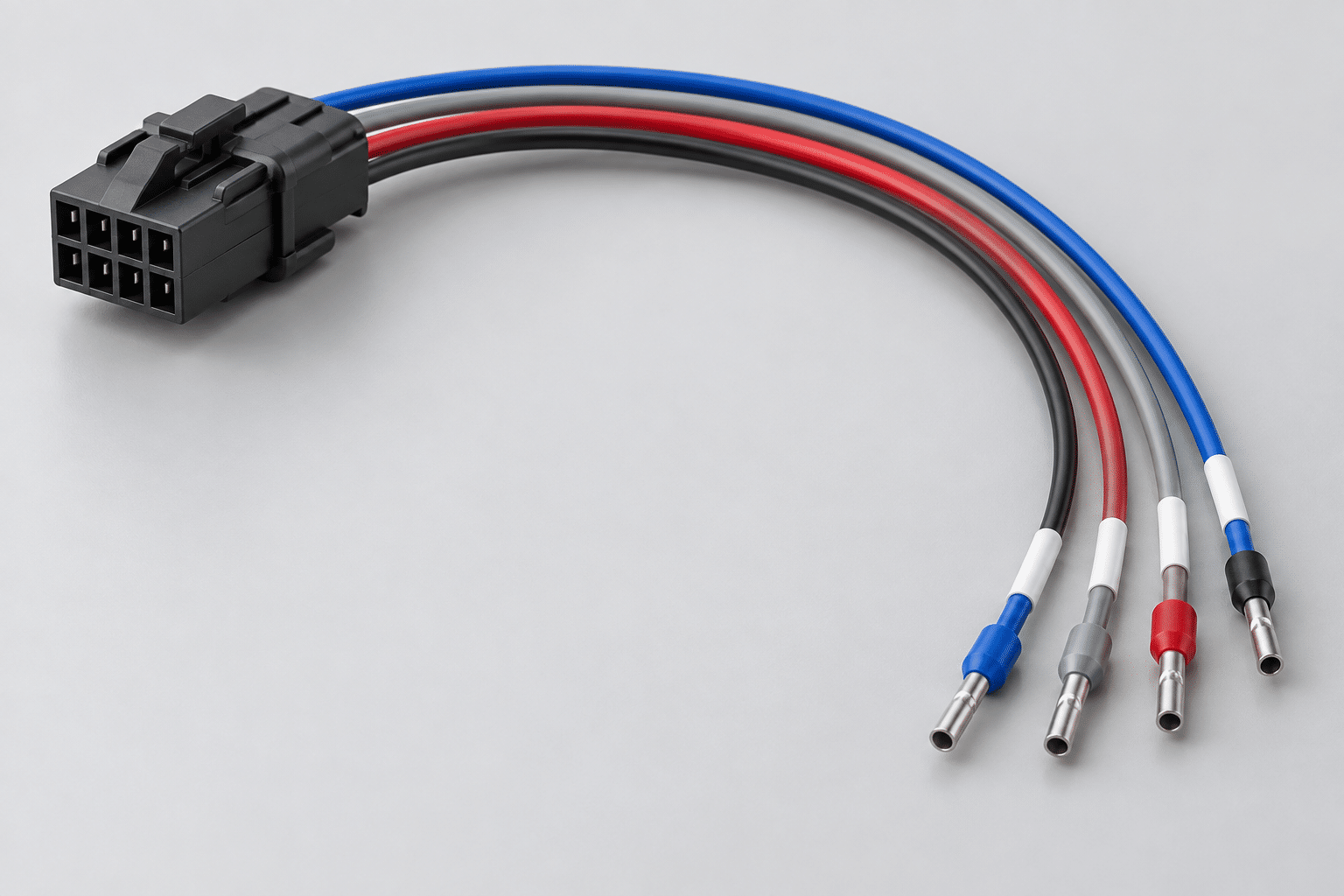
Cablum manufactures connector pigtail harnesses to customer-approved drawings, wire specifications and connector requirements. We can process multi-pin connector assemblies with individually identified wires, ferrule-terminated free ends and specified twisted pairs.
Define the connector interface and each wire end together, so the delivered assembly matches the equipment connection plan.
Request a Pigtail Harness Quote
Build-to-drawing service. Component availability, tooling, quantity and inspection scope are reviewed before quotation.
PRODUCT SCOPE
A Connector at One End, Defined Wire Ends at the Other
This page covers a specific assembly format: wires leave a connector and terminate individually for the next equipment connection. It is not a universal replacement harness or a stocked, model-specific repair part.
Connector-side assembly
Specify the housing, contacts, wire cap, seals and accessories where required. Cavity population follows the approved pinout, including any intentionally unused positions.
Identified free ends
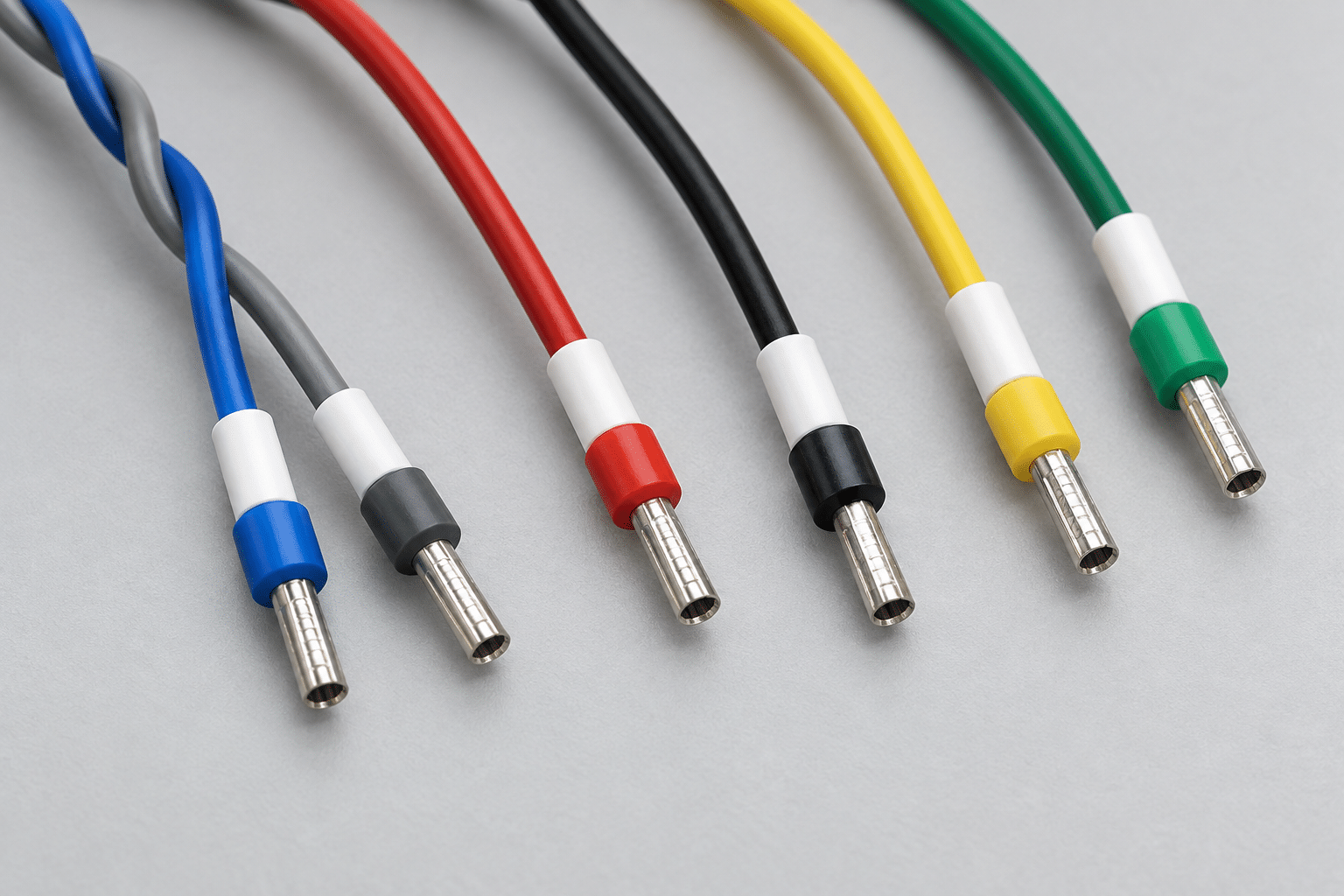
Define each wire’s finished length, identification and end treatment. Ferrules, stripped ends or other specified terminations are reviewed against the receiving interface.
Project-defined wiring
Mixed wire sizes, specified twisted pairs and local bundling can be included in the drawing review. Do not assume every circuit uses the same wire or preparation.
FREE-END DEFINITION
Specify More Than the Connector Part Number
The free ends determine how the harness will connect to the next device. Tell us whether each conductor requires a ferrule, another terminal or a defined strip length.
- State the wire size and required end component or preparation.
- Identify the equipment interface or terminal-block requirements.
- Define label text, location and orientation where important.
- Show the length datum: for example, the agreed connector reference to the finished end.
If the drawing is incomplete, mark the open items for review rather than allowing an unapproved assumption to become a production instruction.
CONFIGURATION REVIEW
Information We Need for Your Pigtail Assembly
| Assembly feature | What to specify | What must not be assumed |
|---|---|---|
| Connector and contacts | Manufacturer references, mating interface, populated cavities and required accessories. | Similar appearance does not establish an approved substitute. |
| Wire construction | Wire reference or specification, conductor size, insulation and color requirements. | A conductor size alone does not define insulation diameter or contact compatibility. |
| Length and fan-out | Measurement reference, finished length, tolerances and any different wire-end lengths. | Overall length and cut-wire length are not interchangeable instructions. |
| Free-end termination | Ferrule or terminal reference, or the required strip preparation and receiving interface. | One ferrule size or style is not automatically suitable for every wire. |
| Wire identification | Exact label text and its relationship to the connector cavity or circuit reference. | Wire color does not replace a mandatory label. |
| Twisted pairs | Pair membership, required pitch and allowed untwisted end length. | A generic “twisted pair” note does not define acceptance limits. |
| Protection and bundling | Required sleeves, wrapping, branch restraint or explicitly unbundled areas. | A full common sleeve is not added unless approved. |
These are quotation inputs, not fixed Cablum product ratings. Final materials and limits belong in the approved project documentation.
IDENTIFICATION & PAIR CONTROL
Keep Cavity, Wire Label and Pair Membership Aligned
A multi-pin pigtail needs an unambiguous connection schedule. Use one entry per conductor to connect its cavity reference to its wire specification, finished-end label and any pair assignment.
If the customer permits a color change, the approved identification and circuit mapping still need to remain correct. Any material substitution is reviewed separately; permission to change a color is not permission to change the wire size, connector or contact.
For documentation support, see our wire harness pinout table guide and wire identification requirements. The customer’s approved schedule governs the finished assembly.
MANUFACTURING & ACCEPTANCE
Agree the Build and Inspection Plan Before Production
1. Review the build package
Align the drawing revision, BOM, cavity map, wire-end details and unresolved component questions. Confirm original-part requirements and any approval process for alternatives.
2. Process and assemble
Cut and prepare the specified wires, terminate contacts, populate the connector and apply the approved free-end preparation, identification and pair requirements.
3. Verify agreed criteria
Define checks for circuit mapping, shorts or opens, contact retention, end preparation, labels and finished dimensions. Specify any required report, sampling or test limits in advance.
A continuity check alone does not establish current rating, environmental sealing or system-level performance. Additional requirements must be reviewed for the particular assembly.
See quality and testing scope or prepare a project test specification.
COMMON QUESTIONS
Custom Pigtail Harness FAQ
Can you manufacture a multi-pin connector harness with labeled ferrule ends?
Yes. Cablum can process this assembly format to approved customer requirements, including individually identified conductors and specified twisted pairs. Exact components, tooling and inspection needs are reviewed for the project.
Can a harness use different wire sizes?
Yes, the build can follow a customer-defined wire schedule. Each specified wire must be reviewed with its contact, seal where used, and free-end termination; mixed sizes are not treated as a single common termination specification.
Must every wire have a different color?
Follow the drawing. Some projects require exact colors; others allow approved color changes while retaining mandatory wire labels. We need that permission documented rather than inferred.
Do you automatically substitute equivalent connectors?
No. State whether original specified components are mandatory. Any proposed alternative requires customer review and approval before use. See original versus alternative components.
What are the MOQ and lead time?
Send the initial batch quantity, expected repeat demand and requested timing. MOQ, sample timing and production lead time are quoted after the component and manufacturing review; this page does not promise a universal minimum or delivery period.
Send Your Connector Pigtail Requirements
Share the drawing or connection schedule, BOM, connector references, wire requirements, free-end details and quantity. Include label content, twisted-pair requirements and the inspection records you need.
Upload Drawing / Request a Quote
Need a different assembly format? Explore multi-branch harnesses or all custom cable assembly products.