Identification target
State whether the identifier belongs to an individual wire, cable, branch, connector, bundle, or complete harness. Use a drawing callout or reference designator that cannot be confused with another item.
OEM DRAWING & IDENTIFICATION GUIDE
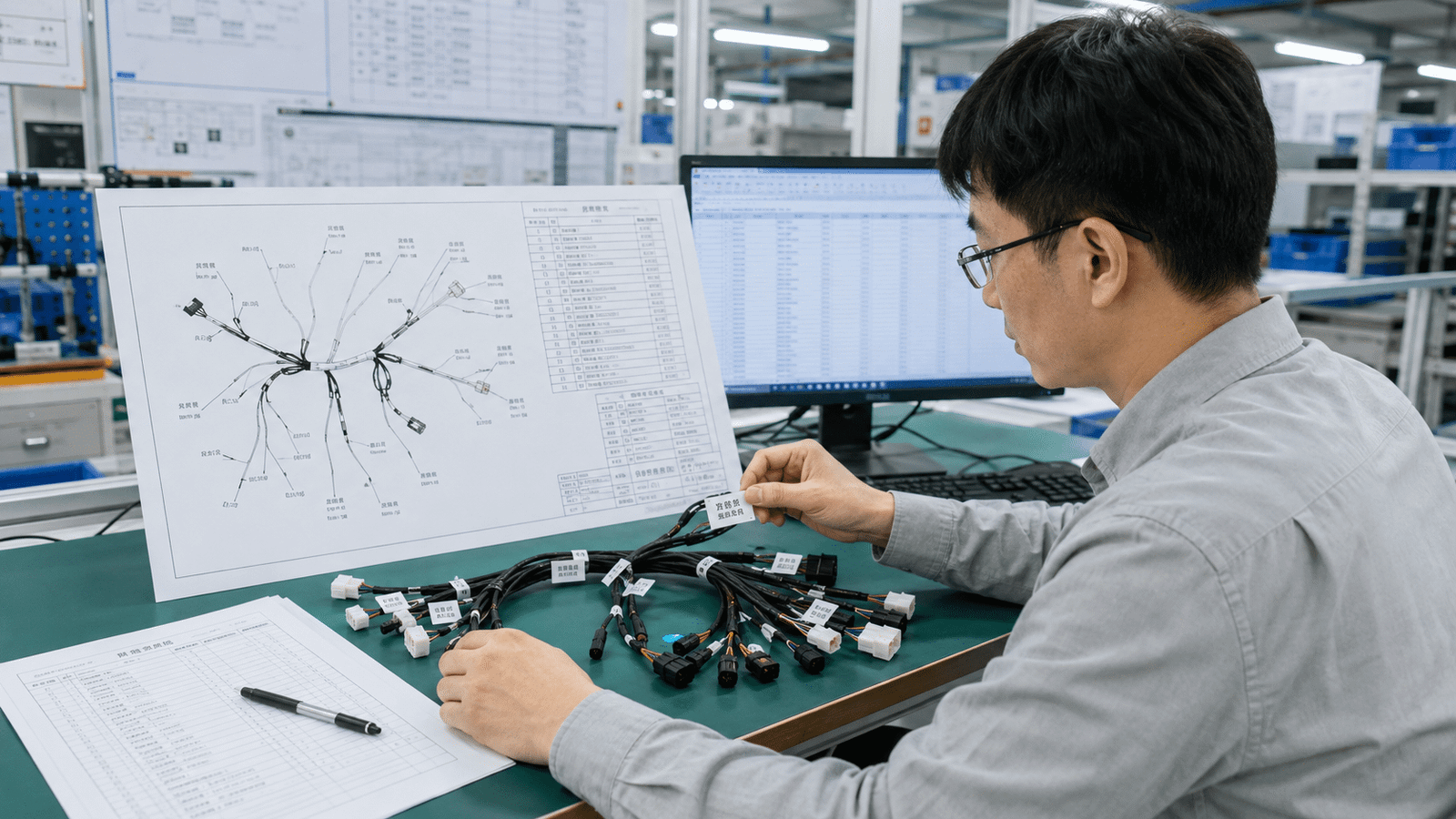
A controlled labeling definition connects each physical identifier on a wire harness to the drawing, BOM, connector table, and customer-approved project requirements.
For quotation and manufacturing review, show what must be identified, where each label belongs, what information it carries, and which document revision controls it.
A labeling definition should identify:
IDENTIFICATION PURPOSE
A label is useful only when the manufacturer can determine what it identifies and how it relates to the approved build documents. A note such as “add label” leaves the content, position, and acceptance requirement open to interpretation.
The drawing should connect each identifier to a wire, cable, connector, branch, or finished assembly. The BOM or related table can then define the customer-approved item description and quantity. If identifier content will be supplied from another controlled system, name that source instead of copying uncontrolled text into the drawing.
CORE DRAWING FIELDS
Field names can follow your document system. The objective is a clear relationship among the physical label, its content, its placement, and the current assembly revision.
State whether the identifier belongs to an individual wire, cable, branch, connector, bundle, or complete harness. Use a drawing callout or reference designator that cannot be confused with another item.
Provide the exact approved text, a controlled data field, or a reference to the document that supplies the value. Separate fixed text from variable project or serial information.
Show the intended position relative to a connector, branch point, sleeve edge, or other drawing reference. Define orientation only when it affects assembly or installation.
Clarify whether the identifier appears once, at both ends, on every branch, or at specified intervals. Do not leave repetition to an unstated shop-floor assumption.
Link the label or identification item to the applicable BOM line. Customer-specified material or component requirements can be reviewed for the project, while availability remains project-specific.
Identify the controlled revision and distinguish released content from placeholders or pending values. A changed identifier should be reviewed with the same discipline as other drawing or BOM changes.
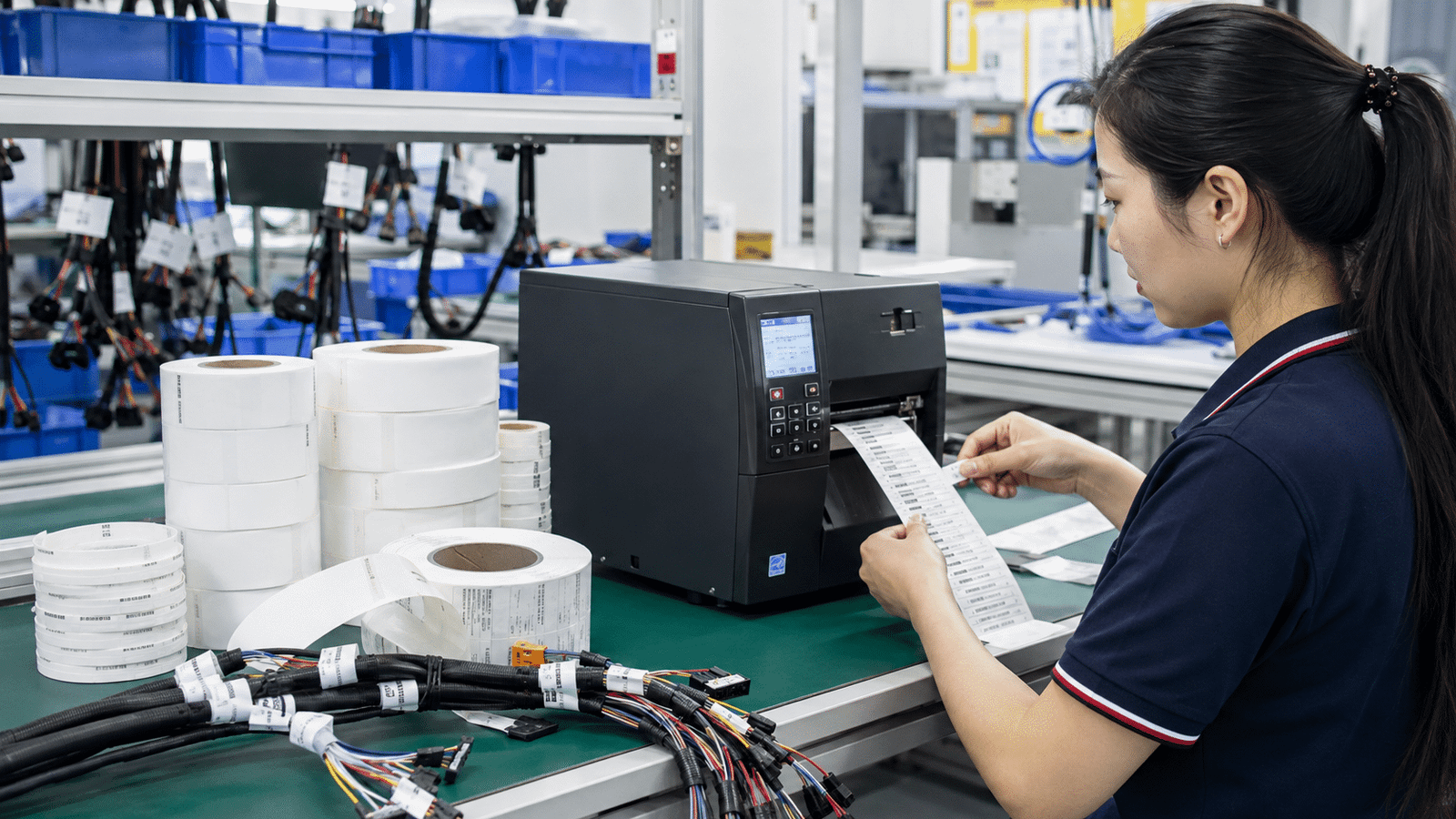
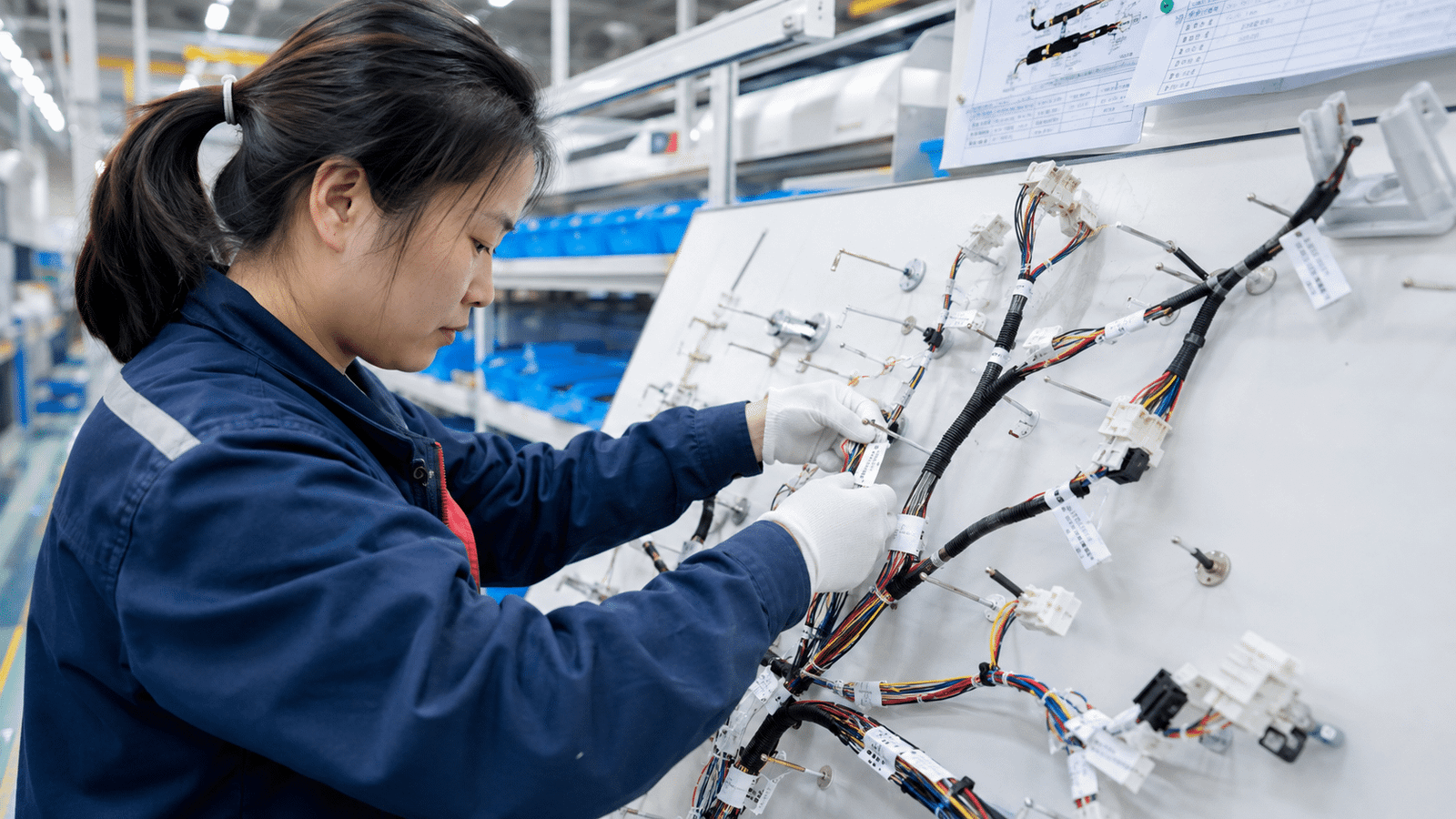
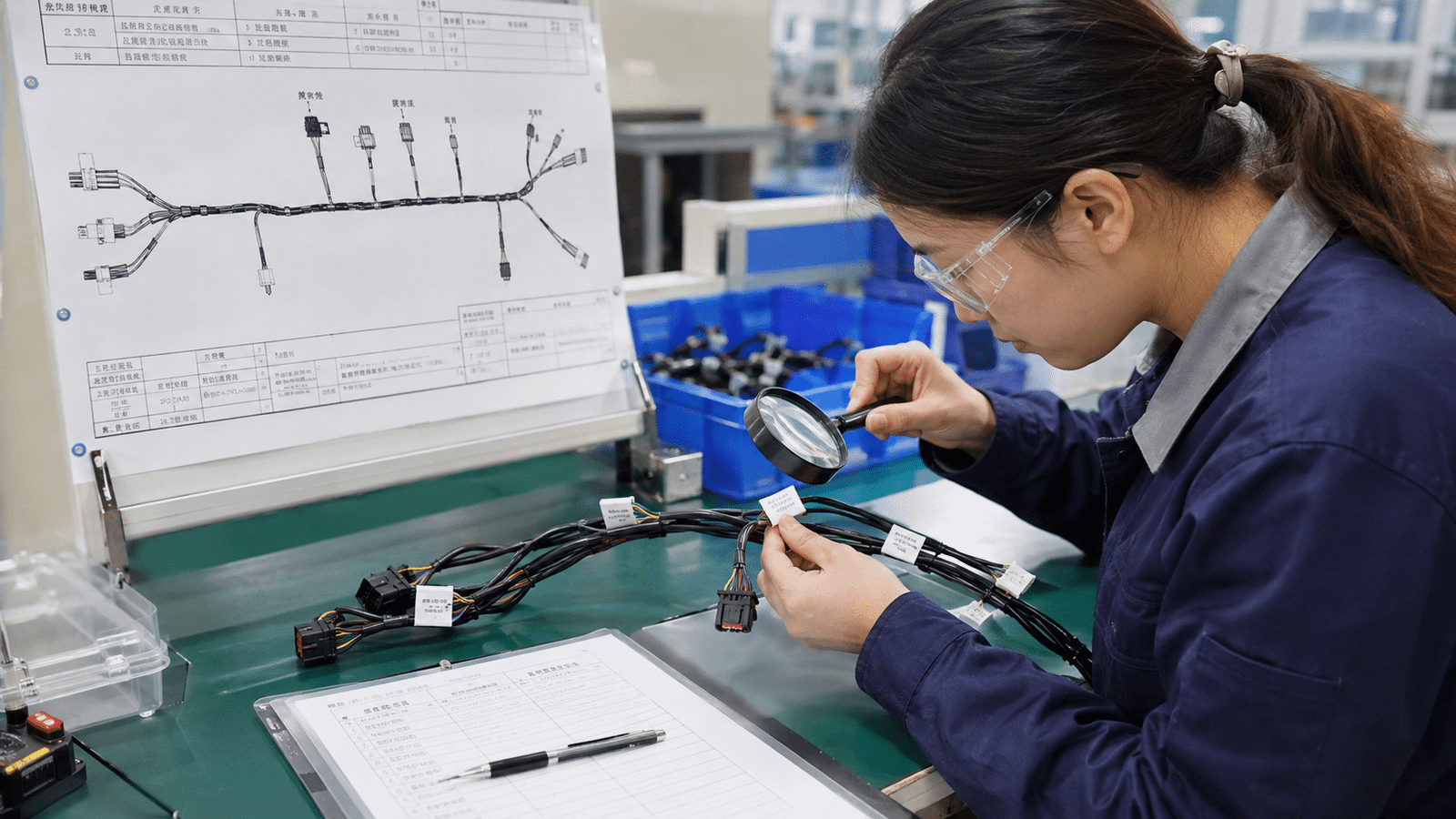
LABELING WORKFLOW
See how controlled label information moves through printing, application, and inspection during a custom wire harness build.
DOCUMENT ALIGNMENT
The same wire, connector, branch, and label references should remain recognizable across the drawing, BOM, wire list, and connector table.
Submit documents from the same release. If a label value is still pending, record it as an open item rather than allowing an obsolete value to appear final.
Define the required identifier and placement without assuming an unapproved material, print process, durability rating, or compliance standard.
For the wider document package, use the wire harness drawing checklist and the wire harness BOM requirements.
COMMON RFQ GAPS
An RFQ does not need to hide unresolved decisions. It should show which details are approved and which require customer or supplier review.
| Gap | Why it matters | Safer treatment |
|---|---|---|
| Uncontrolled label text | The required identifier can change outside the drawing revision | Reference an approved value or controlled data source |
| No placement reference | The label position may interfere with routing or installation | Dimension from a stable connector, branch, or sleeve reference |
| Ambiguous repetition | Quantity and application points remain uncertain | State each target and required quantity explicitly |
| Missing BOM item | The identification item cannot be connected to purchasing information | Add a controlled BOM reference or mark selection open |
| Unsupported performance wording | A generic label note may imply an unverified environmental rating | Define the project requirement and request confirmation |
CABLUM PROJECT REVIEW
Cablum is a Shenzhen-based custom wire harness and cable assembly manufacturer established in 2012, supporting customers in Europe and the United States.
Cablum can review customer drawings, specifications, and customer-approved identification requirements during project review.
A customer BOM can be reviewed as part of project evaluation without assuming inventory, availability, or automatic substitute approval.
Labels can be applied according to drawing or project identification requirements. Exact material and performance needs remain project-specific.
Inspection can be performed according to customer specifications and project requirements; exact coverage and acceptance methods are confirmed for the project.
See Engineering & Prototyping, Quality Testing, and Products for related project context.
BUYER QUESTIONS
PREPARE A CONTROLLED RFQ
Cablum can review the available documents and identify open labeling, placement, revision, and assembly questions for project-specific discussion.