In automotive wire harnesses, copper conductors and connectors are only part of the design. The outer protection system — tape, corrugated tubing, sleeves, clips, heat shrink, and branch wrapping — strongly affects how the harness performs in the final vehicle.
A harness routed under the dashboard has different requirements from one routed near the engine bay, chassis, door, roof, or battery system. Some areas need noise reduction and flexibility, while others require abrasion resistance, impact protection, heat resistance, fluid resistance, or stable branch fixation.
This guide explains how OEM buyers and engineers can evaluate wire harness taping, wire harness wrapping, and automotive harness protection materials before moving from prototype to production.
Table of Contents
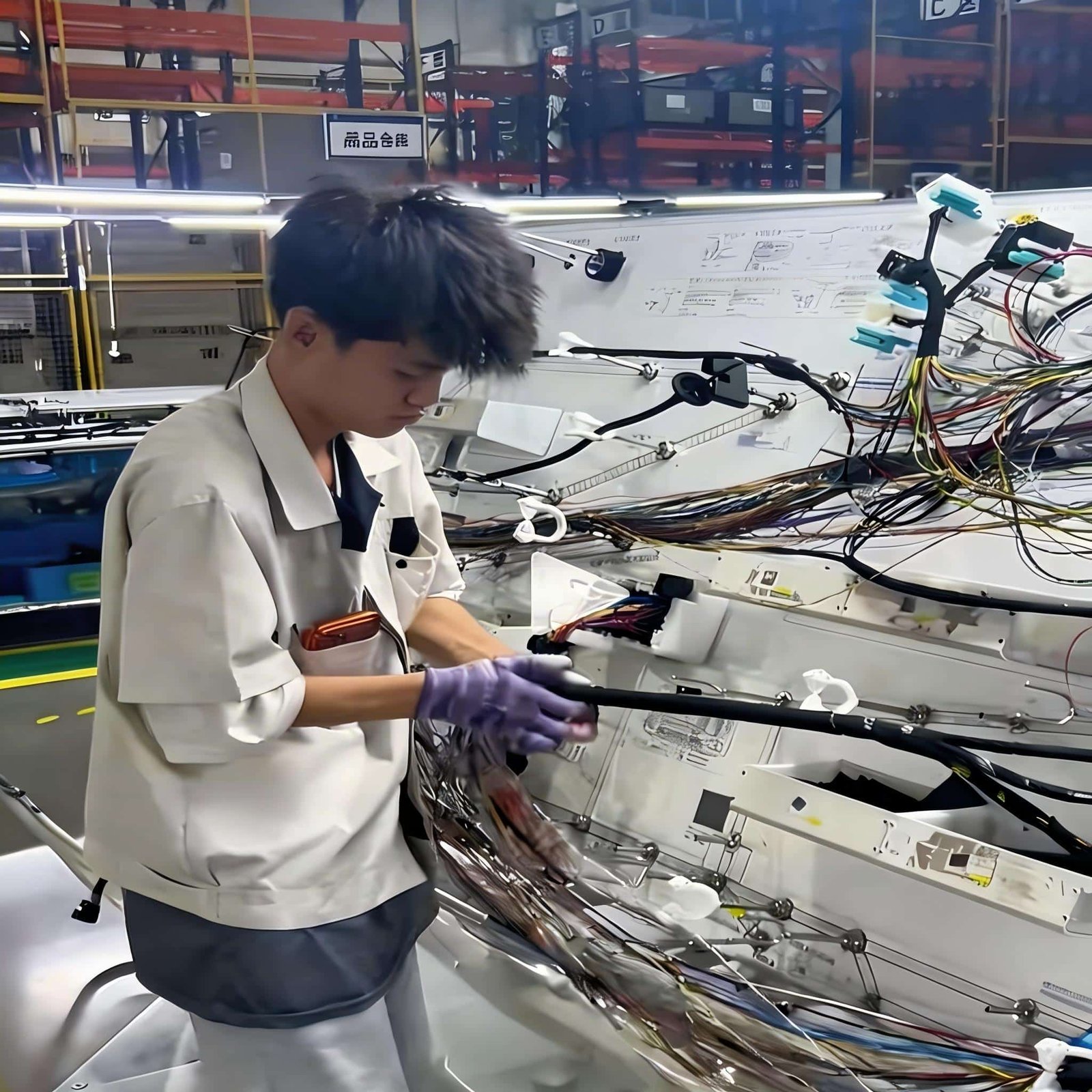
1. Why Wire Harness Taping Matters
Wire harness taping and wrapping help keep wires organized, protected, and routed correctly. In automotive applications, the protection method must match the location, movement, temperature, noise requirement, and possible contact with brackets, sharp edges, fluids, or moving parts.
Poor harness protection can lead to insulation wear, rattling noise, exposed conductors, branch movement, connector strain, moisture problems, or premature failure. Good taping design helps reduce these risks and supports stable assembly during vehicle installation.
Abrasion Protection
Protects insulation from rubbing against chassis, brackets, panels, or nearby components.
Noise and Vibration Control
Fleece or cloth tape can help reduce rattling noise in interior routing areas.
Routing Stability
Spot taping, branch taping, and clips help maintain harness shape and branch direction.
Thermal and Fluid Protection
Engine bay and underbody areas may require materials with higher temperature or fluid resistance.
2. Environment-Based Protection Design
Automotive wire harness protection should be selected based on the routing environment. Final material selection should follow customer drawings, OEM requirements, validation testing, and application-specific standards.
| Routing Environment | Common Protection Materials | Key Requirements |
|---|---|---|
| Engine Bay | Corrugated tubing, high-temperature tape, protective sleeve | Heat resistance, flame retardance, fluid resistance, abrasion protection. |
| Instrument Panel | PVC tape, fleece tape, cloth tape | Noise reduction, compact routing, flexibility, clean appearance. |
| Chassis / Underbody | Heavy-duty corrugated tubing, braided sleeve, abrasion-resistant wrap | Impact protection, abrasion resistance, moisture and debris exposure control. |
| Doors / Roof / Cabin | Cloth tape, fleece tape, sponge tape, lightweight sleeve | Anti-rattle, flexibility, lightweight protection, repeated movement tolerance. |
| Battery / Power Distribution Area | Heat shrink, protective sleeve, corrugated tubing, labels | Insulation protection, routing clarity, mechanical support, inspection access. |
3. Common Wire Harness Protection Materials
There is no single best material for every harness. The right choice depends on heat, abrasion, flexibility, noise reduction, installation space, cost target, and customer specifications.
| Material | Best For | Key Benefits | Notes |
|---|---|---|---|
| PVC Tape | General bundling and interior harness routing. | Cost-effective, flexible, widely available. | Not ideal for high-temperature areas unless specified. |
| Fleece Tape | Dashboard, cabin, and NVH-sensitive areas. | Noise reduction, soft surface, anti-rattle support. | Common for interior harnesses. |
| Cloth Tape | Doors, roof, cabin, and moderate abrasion zones. | Flexible, abrasion-resistant, clean wrapping appearance. | Performance depends on backing and adhesive type. |
| Corrugated Tubing | Engine bay, chassis, exposed routing, and impact-prone areas. | Abrasion protection, impact protection, easier service routing. | PA, PP, or other materials may be selected by requirement. |
| Heat Shrink Tubing | Splices, branch points, terminal areas, and local insulation. | Localized protection, insulation, sealing support when specified. | Requires correct size, shrink ratio, and heating process. |
| Braided Sleeve | Flexible routing, visible harness areas, and moving sections. | Abrasion resistance, flexibility, clean appearance. | Ends may require heat shrink, tape, or molded fixation. |
4. Core Wire Harness Taping Techniques
Proper taping is not just wrapping tape around wires. The overlap, tension, spacing, start point, end fixation, and branch transition all affect appearance and long-term durability.
Dense Taping
Uses overlapping wraps, commonly around half overlap, for stronger coverage and better protection. It is useful in areas requiring improved abrasion resistance or tighter bundling.
Spiral / Sparse Taping
Uses spaced wrapping to hold the bundle while preserving flexibility. It is often used for branches, low-risk interior routing, or areas that need easier bending.
Spot Taping
Uses tape at selected intervals to fix wire groups, support pre-assembly, or hold wires before they are installed into tubing or clips.
Branch Taping
Protects Y or X junctions where wires split into different directions. Good branch taping helps reduce movement, strain, and exposure at transition points.
Process Note
Overlap, spacing, and fixation intervals should follow the customer drawing, internal work instruction, or validated process requirement. For automotive projects, consistency is often more important than using one universal wrapping pattern for every harness zone.
5. Common Taping Defects and Quality Checks
Wire harness wrapping quality should be checked during production and final inspection. Small taping defects can become reliability issues when the harness is installed in a vehicle and exposed to vibration, bending, heat, or abrasion.
| Taping Defect | Possible Cause | Potential Risk | Quality Check |
|---|---|---|---|
| Tape Flagging / Unraveling | Poor end fixation, contamination, wrong tape, or excessive stretching. | Loose tape, exposed wires, poor appearance. | Check tape ends and press-down quality. |
| Wrinkles or Folds | Uneven tension, rushed wrapping, difficult bend area. | May catch on brackets or reduce installation smoothness. | Visual inspection along bends and branches. |
| Insufficient Overlap | Wrong wrapping spacing or inconsistent operator technique. | Lower abrasion protection and possible wire exposure. | Verify overlap or spacing against work instruction. |
| Excessive Tape Tension | Tape stretched too much during wrapping. | Adhesive performance may decline and tape may shrink back. | Check for narrow tape width, stress marks, or lifting ends. |
| Poor Branch Transition | Branch junction not reinforced or wrapped consistently. | Movement, strain, and exposure at Y or X junctions. | Inspect branch start points and bend transition areas. |
| Wrong Material for Environment | Tape or tube selected without considering heat, fluid, abrasion, or NVH. | Premature wear, noise, deformation, or protection failure. | Confirm material against application and drawing requirements. |
| Sharp Edge Contact | Routing not reviewed with clips, brackets, or vehicle mounting points. | Insulation wear and possible electrical failure over time. | Review harness routing, clips, and protective sleeves. |
6. DFM Tips for Better Harness Protection
The best time to improve harness protection is before production tooling and work instructions are finalized. DFM review can help reduce over-protection, under-protection, assembly difficulty, and future reliability issues.
| DFM Checkpoint | What to Review | Why It Matters |
|---|---|---|
| Routing Path | Check nearby brackets, panels, sharp edges, heat sources, and moving parts. | Determines whether tape, sleeve, tube, or clips are needed. |
| Bend Radius | Review tight bends, moving areas, and branch direction. | Prevents excessive stiffness and wire stress. |
| Branch Points | Review Y and X junctions, splice locations, and connector breakout points. | Reduces movement, strain, and local wear. |
| Material Compatibility | Check tape adhesive, temperature rating, sleeve material, and fluid exposure. | Avoids material failure in the final operating environment. |
| Installation Space | Review package space, clips, connector access, and serviceability. | Prevents bulky wrapping from creating installation problems. |
| Quality Standard | Define acceptable overlap, spacing, tape end fixation, wrinkles, and exposed wire limits. | Improves inspection consistency and reduces disputes. |
Related Reading
Wire harness protection should be reviewed together with connector selection, crimping, routing, and production feasibility. See our Wire Harness DFM Case Study to learn how early design review can reduce production cost and risk.
7. How Cablum Supports Harness Protection Design
Cablum supports OEM customers with custom wire harness and cable assembly manufacturing, including BOM review, drawing review, material selection, routing discussion, prototype build, and production process planning.
For automotive and industrial harness projects, our team can help review whether the protection method matches the application environment, installation space, bend requirements, abrasion risk, heat exposure, and quality expectations.
Material Selection Review
Compare tape, sleeve, corrugated tubing, heat shrink, and other protection options based on routing conditions.
Harness Routing Review
Review bend radius, branch points, clips, sharp edges, heat zones, and installation constraints.
Prototype and Sample Build
Build samples to verify protection material, flexibility, appearance, routing, and installation fit.
Quality Inspection Planning
Define taping appearance, overlap, branch protection, exposed wire limits, and final inspection points.
If you are designing a new automotive wire harness, send us your drawing, routing environment, material requirements, connector list, target quantity, and sample photos. Early review can help improve protection design before prototype or mass production.
Optimize Your Wire Harness Protection Design
Need help selecting taping, wrapping, tubing, sleeve, or branch protection methods? Cablum can review your application, routing environment, material requirements, and production feasibility.