1. Interface definition
Identify both mating interfaces, approved component references, keying, orientation, and cable-exit direction. Use the connector selection requirements page to organize this information.
CUSTOM SIGNAL CONNECTIONS
Build the cable assembly around the sensor interface, equipment connection, routing path, environmental requirements, and customer-approved drawing.
Cablum manufactures customer-specific cable assemblies and can review drawings, specifications, component requirements, and project-defined inspection needs before quotation.
A sensor cable assembly should define the complete connection, not only the sensor name. Give the supplier:

PRODUCT ROLE
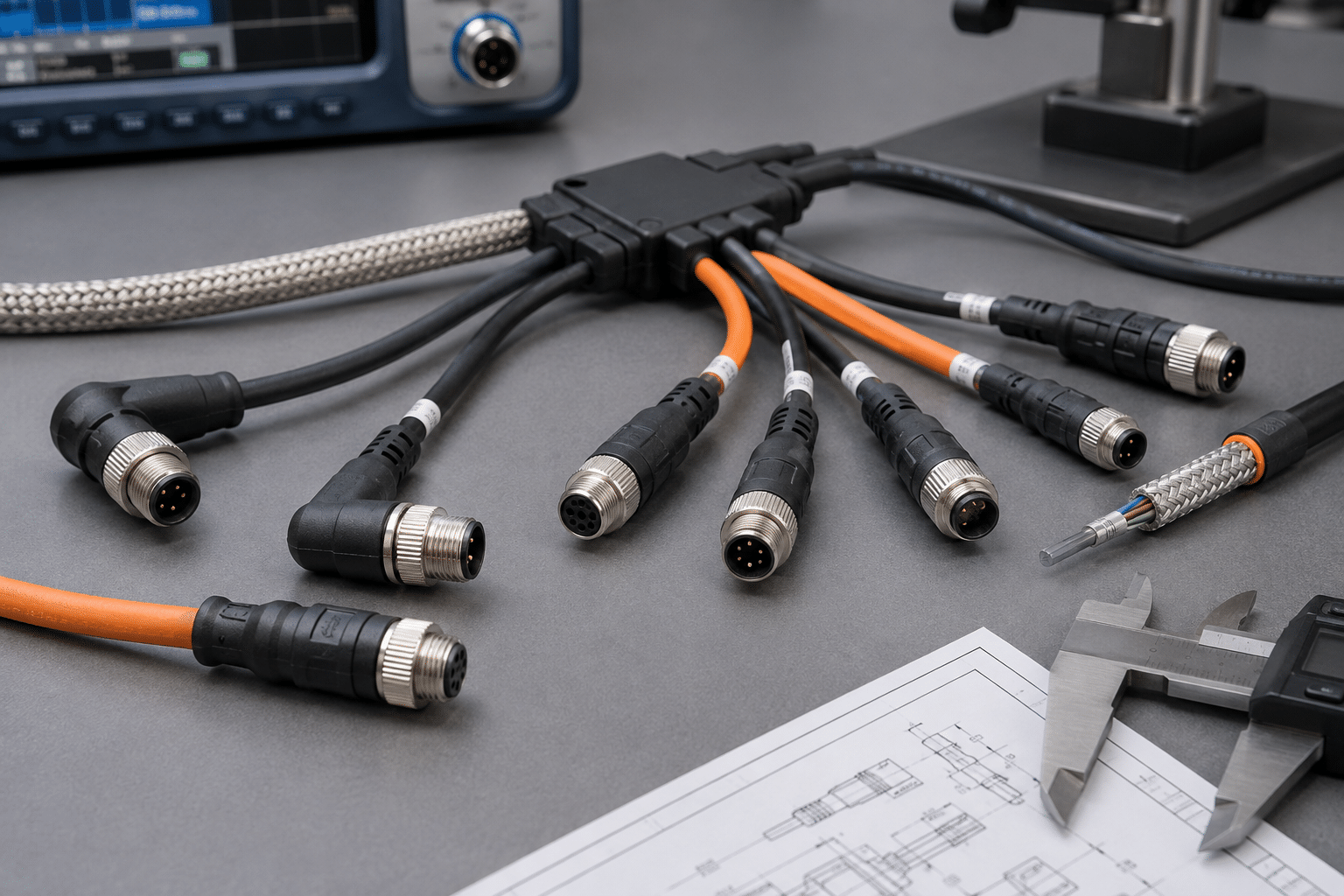
A custom sensor cable assembly provides the defined electrical and mechanical connection between a sensing device and the equipment that receives its signal. The assembly may be point-to-point or part of a larger harness, depending on the customer drawing.
Its page role is narrower than a general data and signal cable assembly: it focuses on the information needed to quote and manufacture a sensor connection without assuming a protocol, connector brand, wire construction, or performance value.
Connector and material choices remain customer- and project-specific. Cablum can review customer-specified requirements but does not assume availability or approve substitutions without confirmation.
RFQ INPUTS
The required detail depends on the sensor, equipment interface, installation, and customer acceptance criteria.
Identify both mating interfaces, approved component references, keying, orientation, and cable-exit direction. Use the connector selection requirements page to organize this information.
Provide the customer-approved connection table, circuit names, polarity where applicable, and any unused or reserved positions. Mark open decisions instead of leaving them as supplier assumptions.
Define overall length, measurement references, routing constraints, bend or movement considerations, and required connector orientation at installation.
State the customer-approved electrical, mechanical, temperature, exposure, and installation requirements. Do not rely on a general description such as “industrial” to define performance.
Specify required sleeving, heat-shrink, restraint, labels, or other protection on the drawing. Exact materials and locations should be controlled by project documents.
Define the applicable visual, electrical, dimensional, documentation, and acceptance requirements. Inspection is performed according to customer specifications and project requirements.
DRAWING CONTROL
A sensor description may identify what is measured, but it does not necessarily define the cable assembly. The drawing and BOM should align the interface, pin assignment, cable construction, length, protection, labels, and revision status.
List customer-approved component information and separate approved items from proposed alternatives.
Name measurement endpoints and show the connector view used to define orientation.
Flag unresolved environmental, testing, or material decisions so the quotation does not silently convert them into assumptions.
For a broader document review, use the Wire Harness Drawing Checklist and BOM Requirements.
DECISION TABLE
The supplier needs controlled project information rather than a generic sensor or cable label.
| Broad request | Question to resolve | Useful RFQ input |
|---|---|---|
| “Sensor cable” | Which two interfaces are connected? | Interface references, mating details, and orientation |
| “Shielded” | What project requirement does shielding address? | Customer-defined construction, termination, and grounding requirements |
| “Standard length” | Where does the measurement begin and end? | Length, reference points, route, and tolerance |
| “Test before shipment” | Which characteristic and acceptance basis apply? | Project-defined method, scope, limits, sampling, and records |
CABLUM SUPPORT
Cablum is a Shenzhen-based custom wire harness and cable assembly manufacturer established in 2012, supporting customers in Europe and the United States.
Cablum can review customer drawings, specifications, and customer-approved requirements during project review.
Cable assemblies are manufactured to customer-specific requirements without implying a standard connector, material, or performance range.
Prototype and production support is available based on project requirements; timing and quantity are reviewed for the project.
Inspection and electrical testing are defined according to customer specifications and applicable project requirements.
Explore Engineering & Prototyping, Quality Testing, and the broader Products portfolio.
BUYER QUESTIONS
START THE REVIEW
Send your drawing, pin assignment, BOM, length and routing information, environmental requirements, quantities, and inspection needs for project-specific review.