OEM harness build definition
Cable Harness Bundling Requirements: Sleeves, Ties & Branches
Specify which wires stay together, where protection starts and ends, and how each branch leaves the bundle. A clear bundling definition gives the supplier a repeatable assembly requirement.
Cablum builds custom wire harnesses to customer drawings, wire and connector requirements. Include the approved protection materials and location references in the same RFQ package.
Review Your Harness Drawing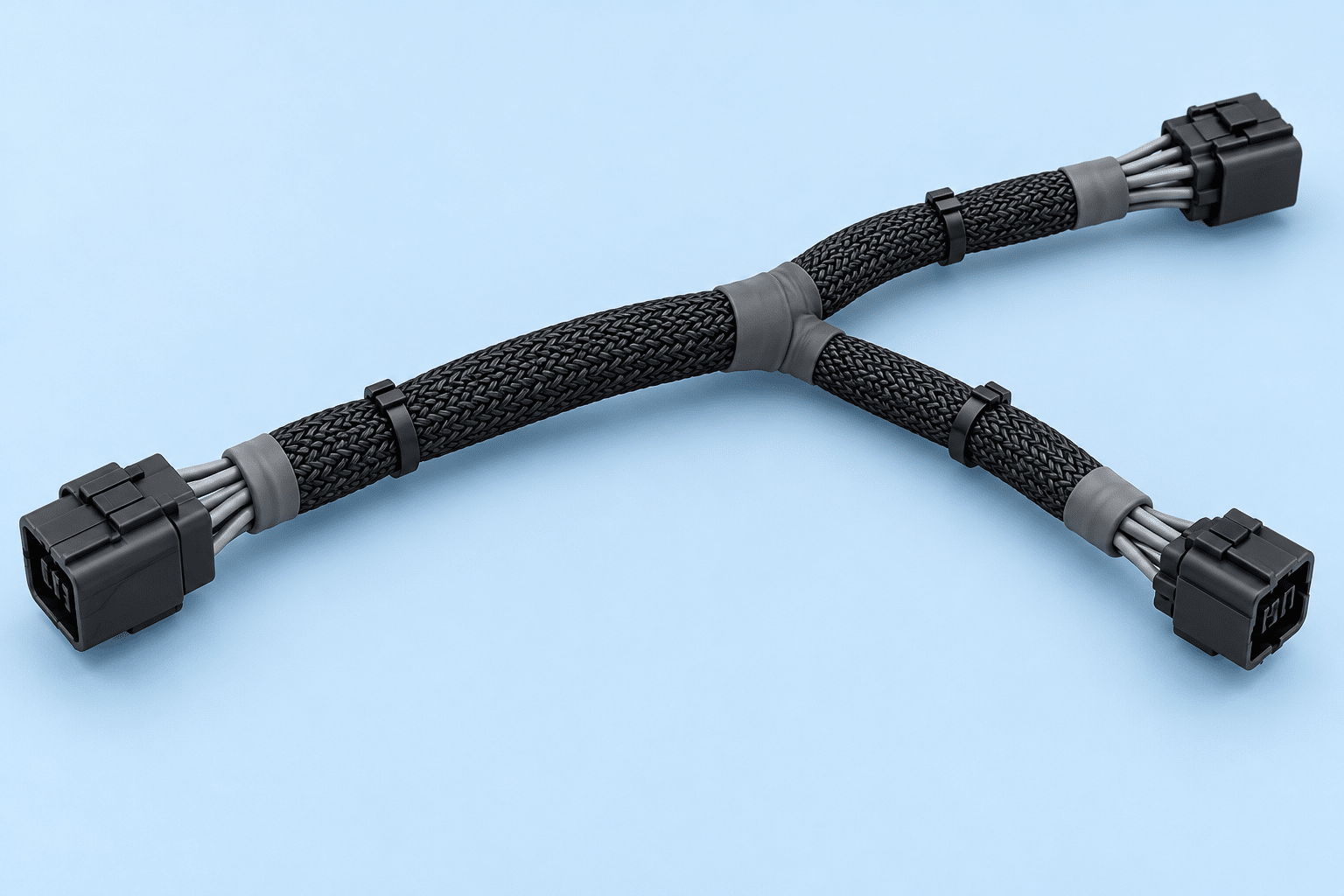
Scope
Separate bundle construction from the equipment route
Routing defines where the harness travels through the equipment. Bundling defines how the individual wires are held together within that route: the grouped conductors, protection coverage, fastening locations and transitions at each branch.
Group the conductors
Identify the trunk and each branch by circuit or wire ID. Mark any conductors that must remain separate or accessible.
Locate the protection
Give the sleeve or wrap a material reference and defined start and end points. Show where wires intentionally remain exposed.
Define the transitions
Detail the breakout, sleeve-end treatment and fastener positions. State which features require customer approval before production.
For equipment paths and installation clearance, use the routing requirements guide. For wrapping methods, see wire harness taping techniques.
Material callouts
Specify the material and its assembly location together
“Add a sleeve” leaves several decisions open. A useful callout identifies the approved material, the area it covers and how its ends are treated.
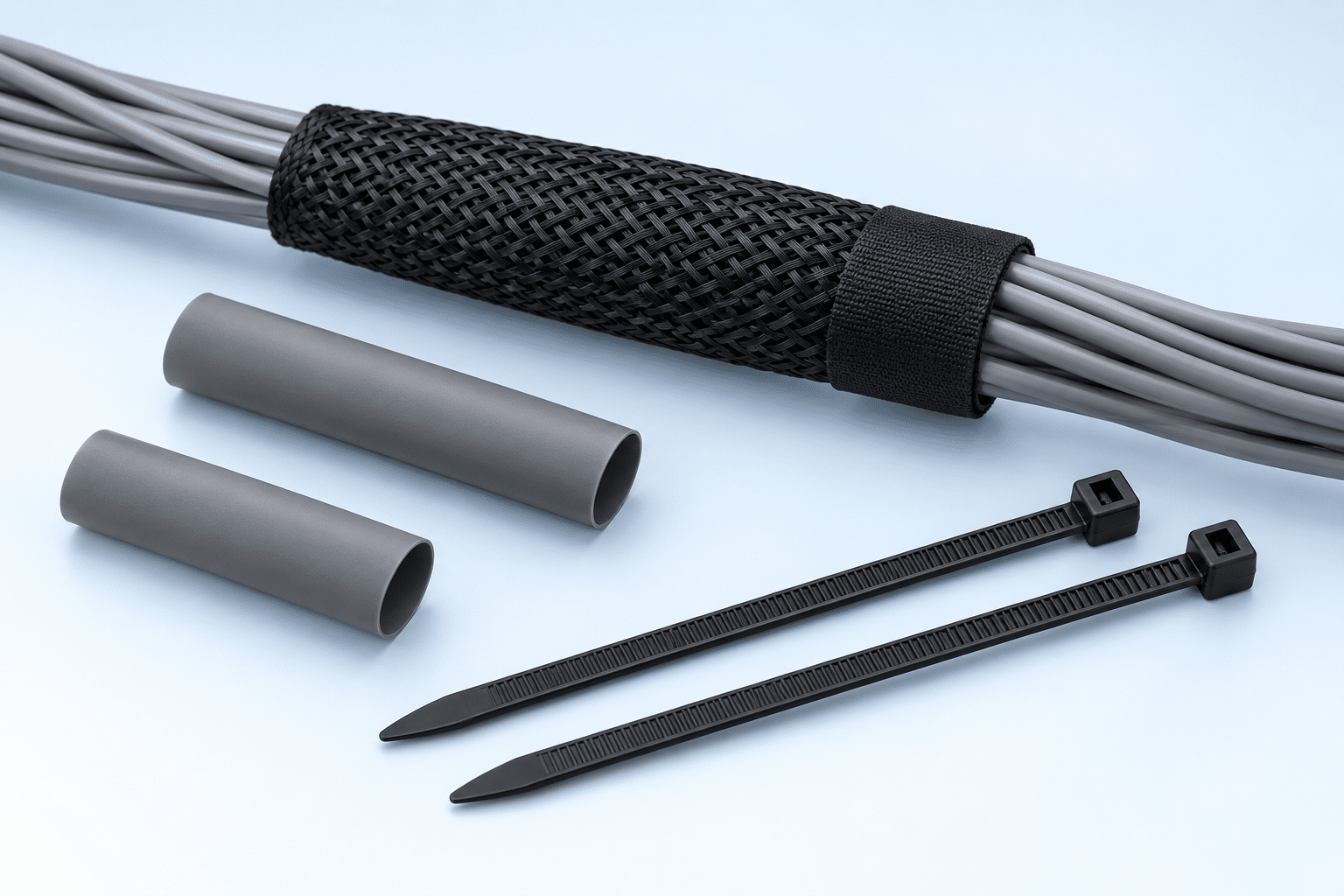
Sleeves and tubing
Specify the part or material reference, coverage limits and required end treatment. Include finished bundle clearance where it controls fit.
Heat-shrink cuffs
State the approved tubing, finished coverage and installation requirements. Review expanded and recovered dimensions against the parts the tubing must pass over and cover.
Ties and retainers
Identify the tie or retainer, its location and any required installation method. Define acceptable fastener and insulation condition for inspection.
Bundling and environmental sealing are separate requirements. If sealing is needed, specify the approved components, process and acceptance criteria explicitly.
Drawing-ready worksheet
Add a protection location schedule to the drawing
Use one row for each controlled protection or fastening feature. Reference a physical datum or a named drawing point so the supplier can find the same location during assembly and inspection.
| Feature | Drawing reference | Material / part | Location definition | Acceptance / open item |
|---|---|---|---|---|
| Main trunk sleeve | Trunk T1 | Approved sleeve reference | Start at datum A; end at branch B1; define uncovered ends | Coverage and end fixation per drawing |
| Branch-end cuff | Branch B1 | Approved heat-shrink reference | Dimension finished coverage relative to sleeve end | Confirm installation access before release |
| Cable tie | Fastener F1 | Approved tie reference | Locate from datum A or a dimensioned feature | Required position and acceptable finish |
| Free-wire area | Connector J2 | No covering in marked area | Define the exposed section and its reference points | Required connector access retained |
| Branch breakout | Branch B2 | Approved transition treatment | Identify outgoing wire IDs and breakout location | Compare against approved branch detail |
This is an illustrative worksheet, with no default spacing, material rating or dimensional tolerance. Fill the fields from your project requirements.
Keep material references aligned with the BOM, and define measurement datums using the length and dimension guide.
Release review
Resolve these four questions before the build is released
- Can the specified sleeve or tubing be installed? Check the assembly sequence and the parts it must pass over. Identify whether it is fitted before connector termination.
- Is the finished bundle envelope defined? Include protection and fasteners when reviewing space at a bracket, enclosure opening or connector exit.
- Does the breakout have a repeatable reference? Align branch IDs, wire grouping and location references with the connection table and harness drawing.
- Are pending decisions visible? Record proposed substitutions, unconfirmed coverage and sample-fit questions as open items with an approval owner.
When a sample is used to explain the bundle, record agreed changes against the drawing revision. See drawing versus sample review.
Inspection basis
Check the finished bundle against the approved definition
Grouping and locations
Compare trunk and branch wire IDs, breakout references, protection boundaries and fastener positions with the released drawing.
Material and finish
Confirm approved material references and the specified sleeve ends, wrap finish and fastener condition. Resolve visible insulation damage or loose protection against the project criteria.
Fit and electrical checks
Review the specified fit features and connector access. Electrical verification follows the project test specification; appearance alone does not establish correct connections.
Define the required checks with Quality Testing and the test specification guide.
Cable harness bundling questions
What should a bundling drawing include?
Identify grouped wire IDs, trunk and branches, protection materials and boundaries, fastener locations, measurement references, end treatment and applicable acceptance criteria.
Is there one standard cable-tie spacing for every harness?
Use the spacing and installation requirements approved for the particular assembly. The drawing or referenced work specification should state the controlled requirement where spacing matters.
Can a protection material be changed during quotation?
A supplier can propose an alternative for review. Record its reference and relevant specification, and obtain the required approval before treating the change as a production requirement.
Does heat-shrink automatically make a bundle waterproof?
Specify sealing separately. Suitability depends on the selected tubing, interfaces, application process and verification requirements.
What should I send Cablum?
Send the harness drawing, BOM, wire and connector requirements, protection location schedule, quantity and required inspection scope. Mark unresolved material or fit decisions clearly.
Technical reference: TE Connectivity harnessing tubing dimensions. Use the datasheet of the selected part when reviewing expanded and recovered tubing size.
Project review
Send a buildable bundling definition with your RFQ
Share the drawing and protection schedule with Cablum for project review. Include the customer-specified wire, connectors and materials, together with quantities and inspection requirements.
Request a Harness ReviewMulti-branch harnesses · Harness assembly services · Drawing checklist